Donivo positions itself as a social media scheduling platform built on two core promises: fair pricing and genuine user influence over product development. The platform targets creators, small businesses, and social media managers who are frustrated with established tools that raise prices annually while ignoring feature requests. By combining multi-platform publishing with a voting system for new features, Donivo suggests a more collaborative approach to social media management software.
The platform emphasizes simplicity in its workflow-connect accounts, create content, schedule posts-while differentiating through price-lock guarantees for early adopters and direct user participation in the product roadmap. For individuals and small teams managing presence across multiple social networks, this value proposition addresses common pain points around cost creep and feature bloat in the social media tool market.
Donivo delivers several core capabilities centered around streamlined social media management:
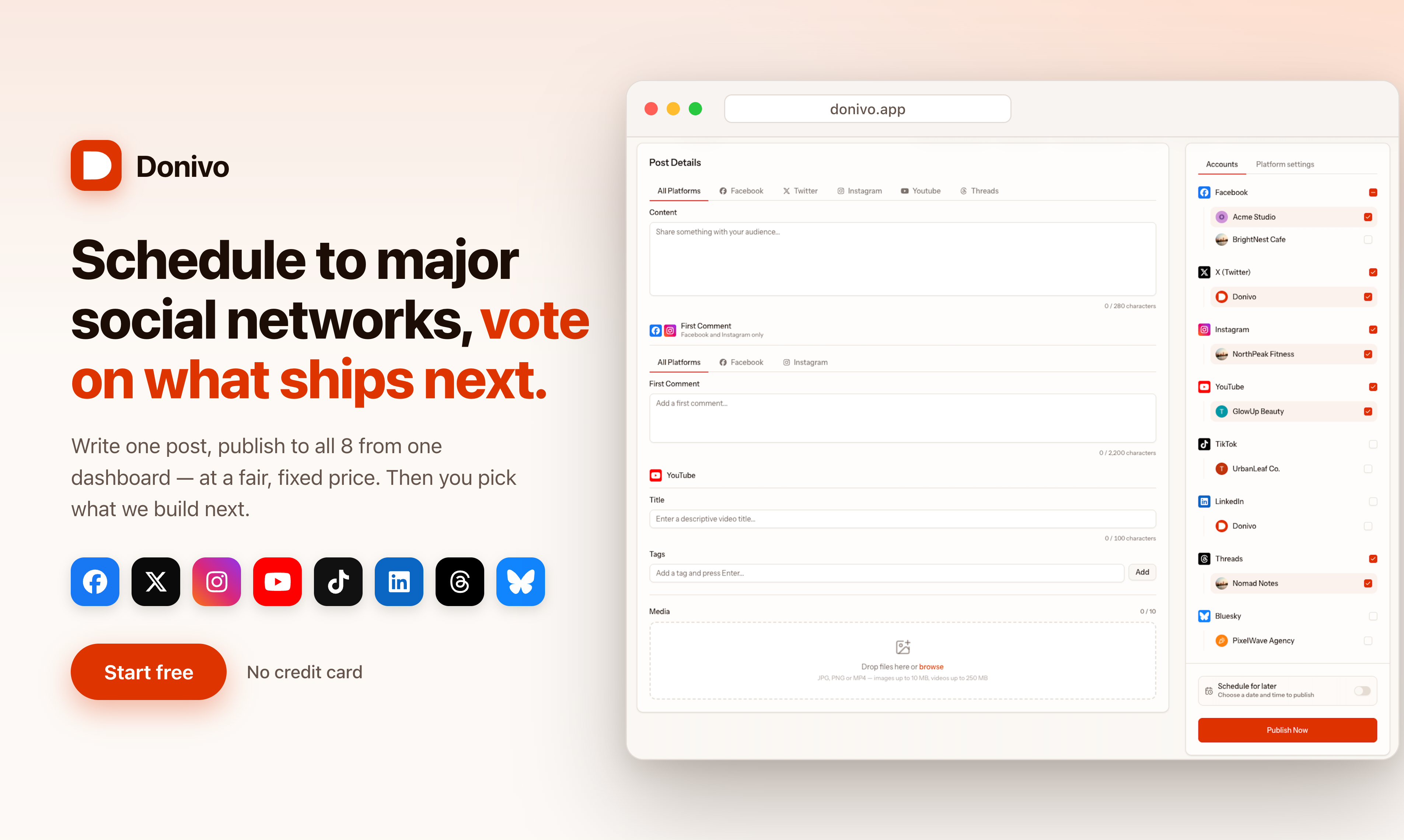
Multi-Platform Publishing: The platform supports posting to eight social networks from a single interface: Facebook, X (Twitter), Instagram, YouTube, TikTok, LinkedIn, Threads, and Bluesky. Users write content once and distribute it across all connected platforms without copying and pasting.
Scheduling and Queue Management: Posts can be scheduled for automatic publication at chosen times, with support for queuing content ahead. This allows users to batch-create content and maintain consistent posting schedules without being online at publication time.
Media Support: The platform handles both image and video attachments, enabling rich posts across supported networks from the same interface.
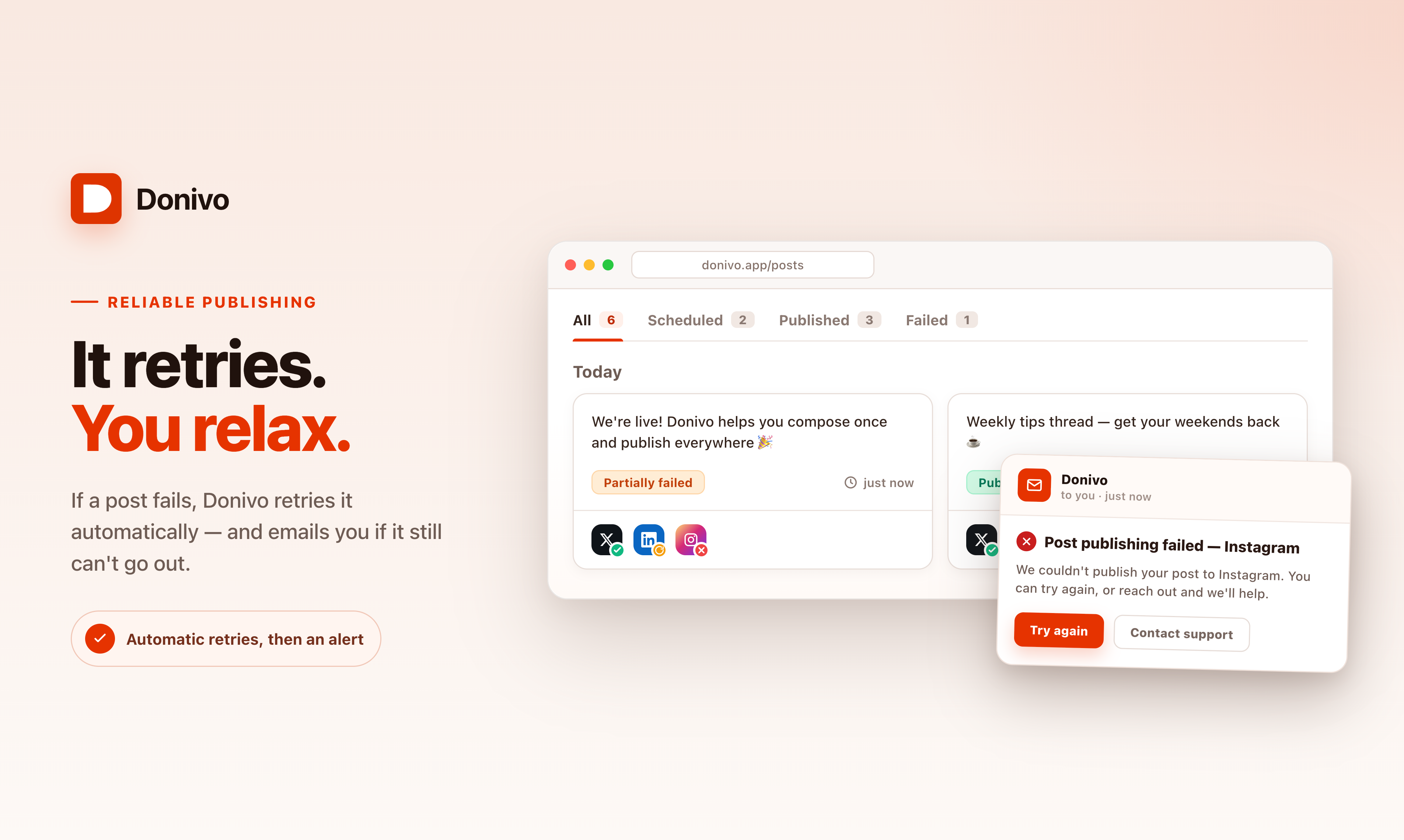
Automatic Retry and Alerts: If a post fails to publish, Donivo automatically retries and sends email notifications to ensure nothing slips through without awareness.
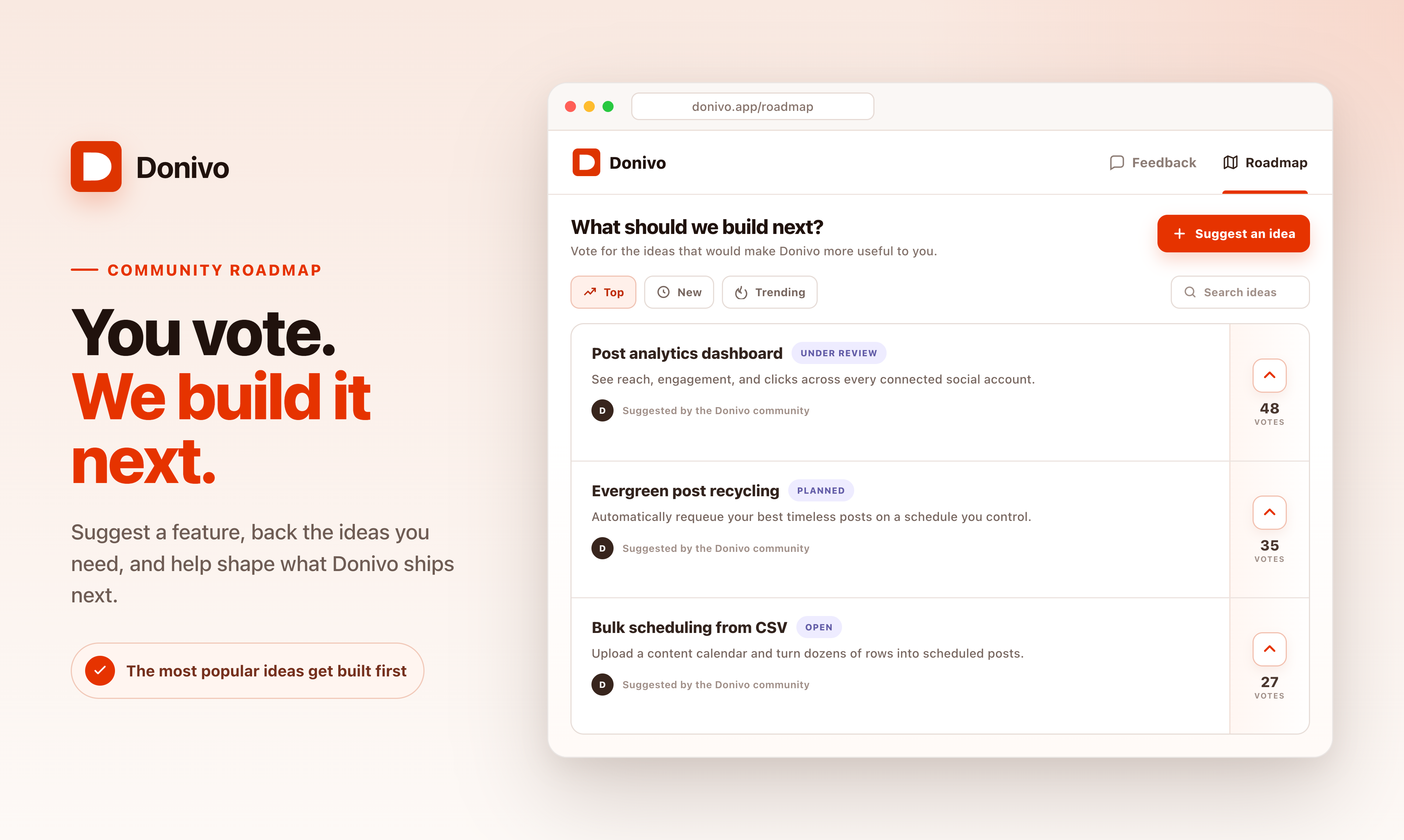
Feature Voting System: A distinctive element where users can request new features and vote on ideas from other users. The most popular requests get prioritized for development, suggesting genuine user influence over the product roadmap.
Price Lock Guarantee: Early adopters who join paid plans receive locked-in pricing that never increases, even if the platform raises rates for new users later.
Free Tool Suite: Donivo offers complementary tools including Best Time to Post calculator, Image Size Cheat Sheet, UTM Link Builder, Engagement Rate Calculator, Social Media Holidays calendar, Character Counter, Thread Splitter, Social Post Preview, Instagram Hashtag Generator, Instagram Bio Generator, Instagram Grid Maker, and Image Resizer.
Based on the public site evidence, Donivo serves several distinct user scenarios:
Individual Creators: The Free and Starter plans target creators who want consistent posting without managing multiple apps or paying premium prices. The 30-300 post monthly limits accommodate regular content creators building audience across platforms.
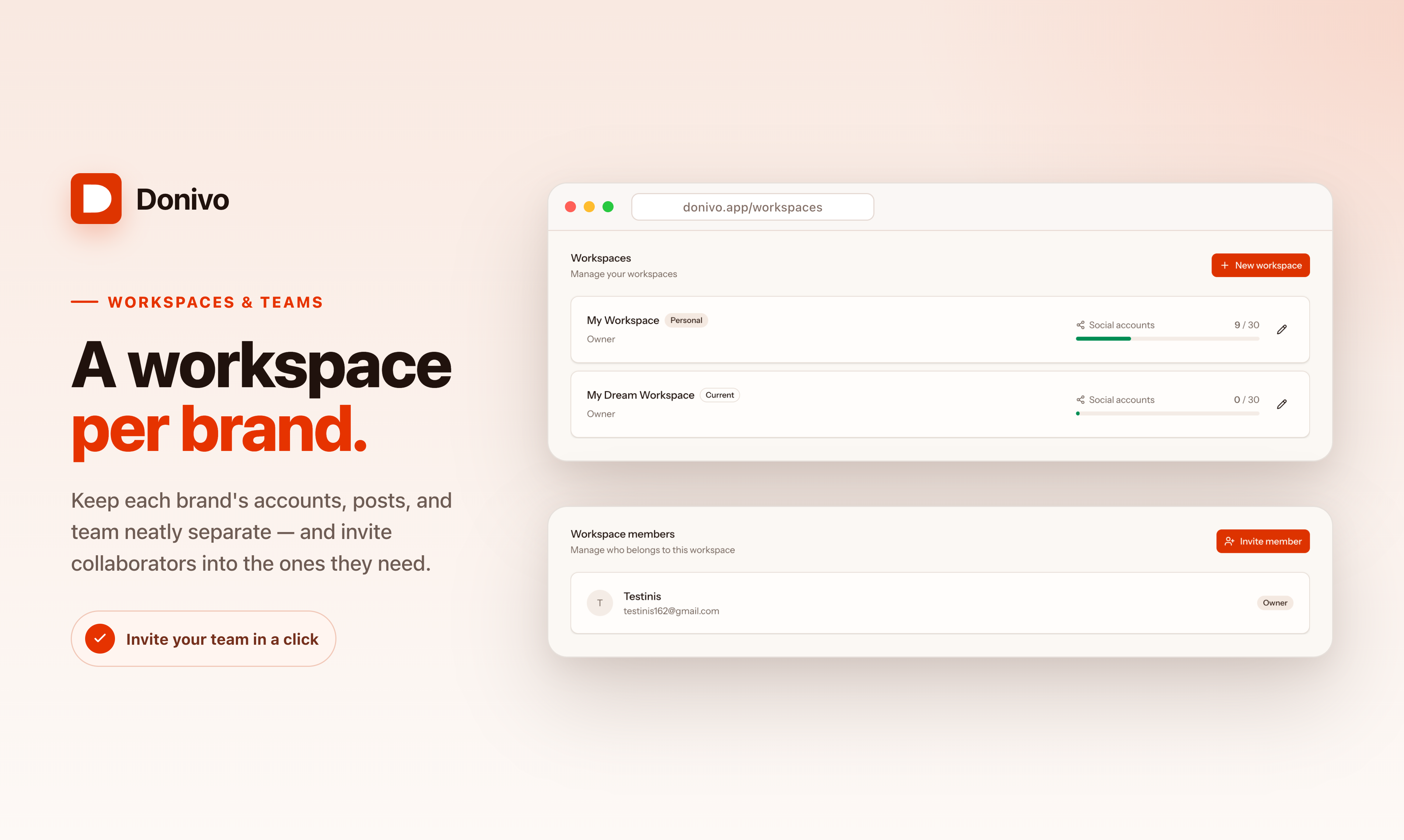
Small Businesses and Growing Brands: The Pro plan supports multiple workspaces and higher post volumes, suiting businesses managing brand presence across several social accounts with need for organized workflow separation.
Social Media Agencies: The Agency tier with unlimited workspaces and social accounts serves professionals managing multiple clients, providing the scale and flexibility needed for client-based work.
Multi-Platform Publishers: Users frustrated with platform-specific tools who want unified scheduling across Facebook, Instagram, X, YouTube, TikTok, LinkedIn, Threads, and Bluesky without context-switching between different apps.
Price-Conscious Users: Those concerned about subscription cost creep who want predictable long-term pricing through the early-bird price lock guarantee.
Feature-Influencing Early Adopters: Users who want direct input on product development and are willing to engage with voting systems to shape the platform's evolution.
Donivo operates on a tiered freemium model with clear monthly pricing:
Free Plan - $0/month
Starter Plan - $7/month ($10 regular price)
Pro Plan - $14/month ($22 regular price) - Most Popular
Agency Plan - $59/month
Billing Notes: Annual billing offers 2 months free. The platform emphasizes transparent pricing without per-account charges. Early bird pricing locks in rates permanently for founding users even as the platform grows and potentially raises prices for new subscribers.
Donivo emphasizes simplicity in both setup and ongoing use. The platform promises users can "start posting in minutes" with a three-step process: connect accounts (without Donivo seeing passwords), create posts with media, and schedule or publish immediately.
The interface appears designed for straightforward content management with visual indicators for post status (Published, Scheduled, Draft). Email notifications keep users informed of publication status and any issues requiring attention.
Support channels include:
The voting system for features represents a support-adjacent feature-users who feel ignored by other platforms can participate directly in shaping Donivo's development priorities.
Donivo operates as a web-based SaaS platform with the following technical characteristics:
Security Model: OAuth-based connections to social platforms mean Donivo never sees user passwords. This standard security practice limits exposure if the platform were compromised.
Platform Coverage: Native integration with eight major social networks covering the breadth of current social media landscape-from established platforms (Facebook, Instagram, LinkedIn, YouTube) to newer entrants (Threads, Bluesky) and video-focused networks (TikTok).
Content Handling: Support for images and videos across platforms, with automatic retry logic for failed posts suggesting robust error handling.
Workspace Architecture: Multi-workspace support enables clean separation between personal and client accounts, or between different brand identities, without cross-contamination.
Free Tool Infrastructure: The extensive free tool suite runs independently of the scheduling platform, accessible without signup, suggesting separate technical infrastructure for these utilities.
Scalability: Tiered post limits (30/300/1000/unlimited) indicate backend architecture designed to handle varying volume requirements from casual users to agencies.
For specific technical specifications around API access, data retention, uptime guarantees, or security certifications, users should consult Donivo's Privacy Policy and Terms of Service.
Pros
Cons
Donivo supports eight platforms: Facebook, X (Twitter), Instagram, YouTube, TikTok, LinkedIn, Threads, and Bluesky. Users can request additional platforms through the feature voting system.
Yes. The free plan includes 3 social accounts and 30 posts per month with email notifications. Note that X (Twitter) support requires upgrading to a paid plan.
Early bird users who join Starter or Pro plans at discounted rates ($7 or $14/month) keep that price permanently, even if Donivo raises prices for new users later. The site shows "25 of 25 spots remaining" suggesting limited availability for these locked rates.
Yes. Donivo includes a feature voting system where users can request new capabilities and vote on ideas from other users. The most popular requests are prioritized for development, though actual implementation depends on technical feasibility and resource availability.
Limits vary by tier: Free (3 accounts), Starter (10 per workspace across 2 workspaces), Pro (20 per workspace across 5 workspaces), Agency (unlimited across unlimited workspaces).
No. Donivo charges flat monthly rates regardless of how many accounts you connect within your tier's limits. This differs from some competitors who charge per connected profile.
Yes. Write your post once and send it to all connected platforms simultaneously, or select specific networks for each post. The platform handles formatting appropriately for each destination.
Yes. Queue posts for any future time and Donivo publishes automatically. You don't need to be online at publication time.
Donivo automatically retries failed posts and sends email alerts to notify you of any issues. This ensures failed publications don't go unnoticed.
Yes. Annual billing provides 2 months free compared to monthly rates.
Donivo enters the crowded social media management space with a clear value proposition: fair, transparent pricing and genuine user influence over product development. The platform addresses real pain points-annual price increases, ignored feature requests, per-account fees-that frustrate users of established competitors.
The eight-platform coverage including newer networks like Threads and Bluesky suggests attention to the evolving social landscape, while the price lock guarantee offers financial predictability rare in SaaS pricing. The free tier provides genuine utility for testing, and the extensive free tool suite demonstrates commitment to delivering value beyond the core scheduling product.
However, as a newer platform, Donivo lacks the proven track record, advanced analytics, and deep feature sets of established competitors. The feature voting system, while appealing in concept, cannot guarantee specific capabilities will be built. Users requiring sophisticated team workflows, approval processes, or detailed analytics may find the platform too basic.
For individual creators, small businesses, and agencies prioritizing simplicity, fair pricing, and direct product input over comprehensive feature sets, Donivo presents a viable alternative worth exploring-particularly for those who can secure early bird pricing before spots run out. As with any newer platform, users should validate that core functionality meets their specific needs during the free tier trial before committing to paid plans.



Testinis

The One Startup : Navigate. Build. Grow.

Discover the Best AI Tools & SaaS Solutions

Build Trust with DR Checker
Get your brand featured here
Discover similar products in the same category